

This website stores cookies on your computer. These cookies are used to collect information about how you interact with our website and allow us to remember you. We use this information in order to improve and customize your browsing experience and for analytics and metrics about our visitors both on this website and other media. To find out more about the cookies we use, see our Privacy Policy.
If you decline, your information won’t be tracked when you visit this website. A single cookie will be used in your browser to remember your preference not to be tracked.
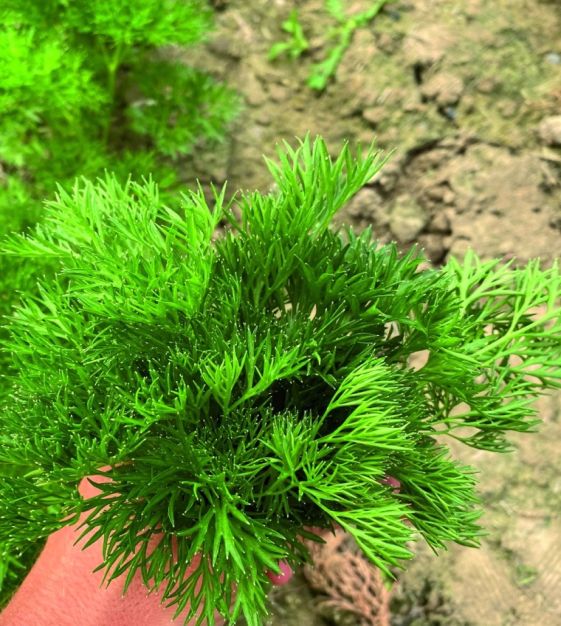
New! 75 days A fern-leaf variety, Menuette has more delicate, feathery leaves, kind of like Dill, with a soft Parsley flavor with a hint of sweet nuttiness for garnishes and salads. It may also be used as regular Parsley in soups, sauces and baked recipes. (OP.)
Petroselinum crispum. According to Culpeper's Herbal, Parsley is an herb of Mercury; it comforts the stomach and just generally cures what ails you! Indeed, Parsley is considered highly cleansing and refreshing to the digestive system. This vital, ubiquitous herb is indispensable for brightening soups, salads and pastas. Parsley is best raised as transplants sown indoors 6 to 8 weeks prior to setting out after the last spring frost date. (If Parsley re-seeds in our gardens, we leave them and consider ourselves lucky!) Grow Parsley in pots near the kitchen for quick snipping. Vitamin A, C and iron-rich Parsley tolerates some shade; it loves rich, moist soil and regularly survives frost, dying back and re-emerging the following spring. Harvest by snipping leaves and stems as needed. Allow a few of these Umbelliferae family members to flower since the fragrant umbels attract desirable pollinating insects to your garden. Biennial.
Parsley Sowing Instructions
Planting Depth:1/4”-1/2” Row Spacing:12” Seed Spacing:1” Days to Germination: 14-25 days Germination Temperature:45°-75°F
Direct-sow Parsley outside as soon as the soil can
be worked in the spring. Or, raise as transplants 6
to 8 weeks before the last frost. Sow thinly in pots
of fine starter mix. Speed the germination process
by soaking the seed for 24 hours in warm water
before planting. To maintain humidity, secure a
plastic bag over the pot, but make sure you remove
it the minute the seed starts to germinate. Parsley is
easy to grow, once it begins to germinate. Mark
rows well or you may lose track of the little Parsley
seedlings among exploding spring weeds! Parsley
prefers moderately rich soil amended with compost
and/or well-rotted manure. Accustom seedlings
gradually to the outdoors, planting out when the
danger of frost has passed. Feed as needed with
liquid organic fertilizer. Parsley tolerates some shade
and can survive light frost. Harvest by snipping
leaves and stems as needed.
Petroselinum crispum. According to Culpeper's Herbal, Parsley is an herb of Mercury; it comforts the stomach and just generally cures what ails you! Indeed, Parsley is considered highly cleansing and refreshing to the digestive system. This vital, ubiquitous herb is indispensable for brightening soups, salads and pastas. Parsley is best raised as transplants sown indoors 6 to 8 weeks prior to setting out after the last spring frost date. (If Parsley re-seeds in our gardens, we leave them and consider ourselves lucky!) Grow Parsley in pots near the kitchen for quick snipping. Vitamin A, C and iron-rich Parsley tolerates some shade; it loves rich, moist soil and regularly survives frost, dying back and re-emerging the following spring. Harvest by snipping leaves and stems as needed. Allow a few of these Umbelliferae family members to flower since the fragrant umbels attract desirable pollinating insects to your garden. Biennial.
Average seed life: 2 years.
Parsley Sowing Instructions
Planting Depth:1/4”-1/2” Row Spacing:12” Seed Spacing:1” Days to Germination: 14-25 days Germination Temperature:45°-75°F
Direct-sow Parsley outside as soon as the soil can
be worked in the spring. Or, raise as transplants 6
to 8 weeks before the last frost. Sow thinly in pots
of fine starter mix. Speed the germination process
by soaking the seed for 24 hours in warm water
before planting. To maintain humidity, secure a
plastic bag over the pot, but make sure you remove
it the minute the seed starts to germinate. Parsley is
easy to grow, once it begins to germinate. Mark
rows well or you may lose track of the little Parsley
seedlings among exploding spring weeds! Parsley
prefers moderately rich soil amended with compost
and/or well-rotted manure. Accustom seedlings
gradually to the outdoors, planting out when the
danger of frost has passed. Feed as needed with
liquid organic fertilizer. Parsley tolerates some shade
and can survive light frost. Harvest by snipping
leaves and stems as needed.
If you step away from your wheelbarrow for more than an hour, its contents will be emptied and returned to inventory. If you haven't made up your mind, place your order knowing that you can change it prior to shipment. If you're just not ready to order yet, please print a copy of your wheelbarrow for your own reference.