A Permanent Trellis Lots of people these days have small yards, or ones so
shaded that there’s only a tiny patch available to grow
sun-loving veggies. If you are among them, rise to the
vertical challenge and build a sturdy trellis that is a
permanent fixture in the garden. The best place for it is
along the north edge of the plot, so the crops won’t shade
anything behind them. Use rugged posts sunk deeply into the
ground at both ends and at 8-foot intervals. Then attach an
attractive wooden lattice for a stylish effect~or just nylon
netting or wire mesh if utility is your chief goal.
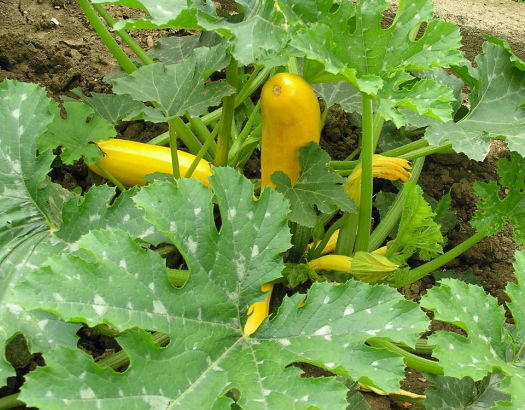
On the trellis you can grow any vining crop: tomatoes,
peas, beans, cucumbers, squash, gourds, melons and even
pumpkins. Vines can be tied to the trellis with soft twine
as they grow. With tomatoes, squash and cukes it helps to
remove side shoots and train the plants to a single stem.
Heavier fruits like pumpkins can be supported with mesh
onion bags.
Plant in families~squash, melons and cucumbers
together, peas and beans together, tomatoes by themselves.
Then move each group to the next space in the row each year
to maintain a crop rotation.
Ready, Get Set, Sow When spring arrives we’re all eager to get seeds into the
ground and start turning it from brown to green. Here are
some tips for an early, bountiful harvest.
1. For extra-early crops like peas and onions, prepare the
bed the fall before. Spread compost on your seedbed, scratch
it into the top few inches of the soil, then smooth the bed
over. It will be all ready to go when the ground thaws, even
if the soil is still too moist to be worked. All you’ll need
to do is make a little furrow for the seeds and in they go.
2. When you prepare soil for carrots, make sure it has a
fine, crumbly texture free of rocks and other obstacles.
After sowing, water the rows every day~even twice a day if
the sun dries out the surface. Carrot seed will not
germinate in dry, crusted soil. After you see those little
grass-like spikes of green poke up, you can relax a bit.
3. Corn will grow at quite low temperatures, but needs
warmer ones for germination. Usually it is sown directly
into the garden, but in a cool spring the seeds can just sit
there refusing to sprout. If you’re hoping for an early
crop, you might start some of it indoors. Plant a few seeds
in each peat pot or soil block. then be prepared to
transplant them the minute you see the first sign of green,
because the tiny plants will immediately send down strong
taproots. If there’s still danger of frost, cover the rows
with spun-bonded floating row cover.
4. Most salad greens are sown directly in the ground, then
thinned. Whether it’s lettuce, mache, claytonia, chard, beet
greens, turnip greens or spinach, there you are on your
hands and knees, snipping tiny plantlets. Think of this as a
harvest, not a chore. Wash the thinnings and toss them with
a light vinaigrette for the world’s best gourmet medley.
10 Tips for Better Compost
Ever wish for a magic potion that’ll make any plant grow better? There’s one right under your nose. In every field and forest, living things die, decompose and are transformed by bacteria and fungi into rich, dark humus that mingles with the soil. This gives the soil both fertility and a crumbly structure that fosters plant growth. You can create humus in a compost pile. Here’s how:
2. Start with the fuel. Compost is made when a pile of organic materials heats up by means of microbial action. This speeds decomposition and kills harmful pathogens and weed seeds. Just as with a campfire, you’ll need dry, brown carbon-rich ingredients~chiefly dead plant stems from the garden. Straw is also excellent.
3. Ignite with “fire”. This means moist, green, nitrogen-rich ingredients such as weeds, spent crops, lawn clippings, kitchen wastes, manure and seaweed. Since they break down fast, they provide the spark.
4. Make a layer cake. Alternating even layers of brown and green ingredients keeps your heap cooking. It can be in a tidy, free-standing pile or one enclosed by wire mesh, boards, logs, straw bales, or anything that lets air in from the sides.
5. Avoid the following: materials treated with herbicides or pesticides; droppings from cats and dogs; autumn leaves such as maple that tend to mat and inhibit the action (shred first with a mower, or compost them separately).
6. Make the heap at least 5’ x 5’ and 3’ deep or it won’t heat up.
7. Inoculate with soil. The soil that clings to weeds’ roots will introduce those helpful worker microbes. If needed, scatter a bit on the pile from time to time.
8. In dry weather sprinkle the heap with water. During winter cover it with a tarp or straw layer so nutrients don’t leach away.
9. Unless you’re willing to wait up to two years, turn the heap once in a while so it cooks evenly and more quickly. Fork it onto an adjacent spot, turning it upside down and reversing the center and the periphery.
10. Be patient. The miraculous death-and-rebirth by which great soil is created still takes time. Your compost should look like rich, dark, crumbly earth when it is done, and after years of home composting your whole garden will look that way too.
10 Ways to Foil Slugs 1. Pick them off plants with tweezers and drown them in soapsuds.
2. Keep the garden free of plant debris, which attracts them.
3. Make little fences from copper strips.
4. Avoid mulch if slugs are a problem.
5. Put out boards for them to hide under; uncover them in the morning and pick them off.
6. Mow grass and weeds around the garden, so they won’t harbor slugs.
7. Grow plants in pots till they’re big enough to withstand nibbling.
8. Keep soil fertile, with a neutral pH.
9. Rake the garden in the fall to expose slug eggs to predators.
10. Encourage predators like ground beetles and birds by avoiding poisons.
A Head Start in the Garden
These days most children seem to understand outer space better than the soil beneath their feet. Gardening with them is a great way to ground them in the earth, and to acquaint them with the natural world. Introduce them to all the small creatures that help aerate the soil and make it a fertile place~earthworms, beetles, ants. Tell them about the invisible bacteria, fungi, protozoa and other microscopic creatures whose work makes life on earth possible. There are millions of bacteria in one teaspoon of soil!
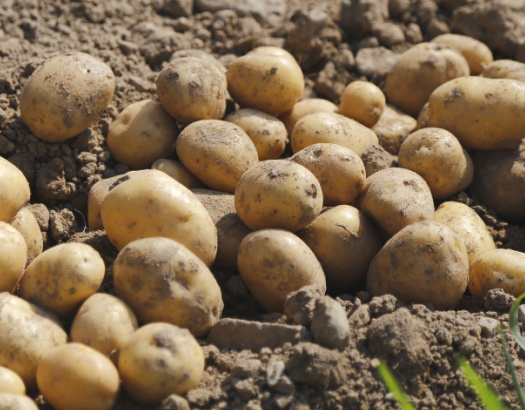
Give them a little plot all their own where they can practice making things grow. For preschoolers it’s more about the process than the goal. Give them big seeds like beans and nasturtiums that are easy to handle and don’t worry if they keep digging them up again. When they’re older they’ll have the patience to wait for those seeds to sprout, then grow. They’ll have the thrill of poking potatoes into the earth in spring, then watching the big plants grow strong and bloom. They’ll grabble in the dark soil, looking for those pale spuds and understand that food comes from the earth, not a bin in the supermarket. They’ll taste the difference. And what a miraculous surprise that will be.
An Indoor Food Garden Did you know that many root crops can be forced indoors for winter eating? Take celeriac, for example. In nature, the bulbous root would regrow in spring if over-wintered outdoors. But you can also sprout it on a sunny windowsill by half burying it in a pot of damp sand. The tender, leafy shoots that appear will flavor many a winter soup or stew.
The same trick works with beets (which produce tender fresh greens) and even with cabbage. When you harvest your cabbages in the fall, pull them up with the stem and roots intact and store them in a root cellar or other cool place. (Some say they keep better with their roots on anyway.) After you've eaten a cabbage head, plant the long stem in one of your sand-filled pots, with the roots firmly buried, and watch the little cabbage leaves sprout all along the stem. These are tender enough to use in salads and beautiful to look at, especially the ones that red cabbages produce. You can even let your stem bloom with tiny yellow flowers. In fact, your whole root garden will attract more attention on your windowsill than any collection of orchids or bromeliads.
Battle of the Voles~The Sequel I like to think I’m getting smarter each year, but the voles
in my garden usually stay just ahead of me. These mouse-like
creatures are usually described as fruit-eaters. Quite true,
if you add to that leaves, stems, roots, bulbs and seeds.
I’ve made an annual practice of trapping them with
mousetraps. Now they’re wise to all my baits~”Here she comes
with her cheese, her peanut butter, her Juicy Fruit gum”. So
the current program in our garden is to set baitless traps
just inside covered wooden boxes, next to small vole-sized
openings. Looking for a nice, safe, dark place to hide, they
run right into the traps. So far, so good!
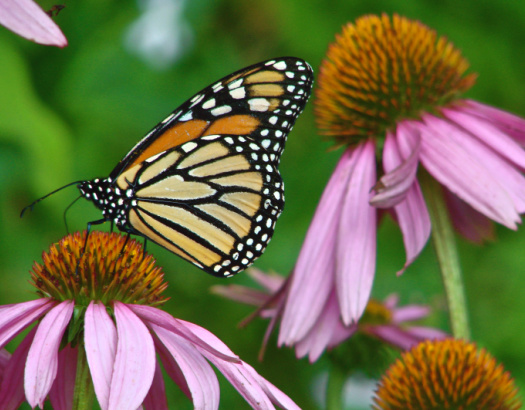
Butterfly Flower Garden Planting Instructions
When to Plant In climates with a freezing winter, our Butterfly Flower Garden mixture can be planted in the spring after the danger of frost has passed. The latest spring planting date would be approximately mid to late June, depending on the date of first frost. Or you may also plant in the fall, as long as soil temperatures are cool enough to prevent early germination. Generally this would be mid-October.
Site Selection Select one with full sunlight for the best success. Choose a relatively weed-free site (including lawn with sod removed). Areas that contain strong weed populations and/or have soil erosion problems can be used but more extensive site preparation will be necessary.
Site Preparation Prepare the soil well because seed-to-soil contact is vital for seed germination and for the healthy rooting of seedlings. Proper preparation also prevents dormant weed seeds (present in topsoil) from becoming a further problem. LIGHTLY scratch (scarify) or roughen the soil surface. Unless the site is heavily compacted, do NOT till the soil deeply, because: 1) deep tilling promotes the germination of weed seeds already present deeper down and 2) in arid climates, deep tilling disturbs the upward movement of moisture through the soil, thereby lowering the moisture-holding capacity of the soil. To prepare small areas, remove existing weeds with a sharp hoe or mower, then follow with very shallow roto-tilling or simply hand raking. Water the area 2 or 3 times each day over a two- to three-week period to encourage dormant weed seed germination. After 2-3 weeks, when this second crop of weeds is up, mow or scrape the new weeds off at ground level. Again: do not roto-till or roughen the soil at this point. Our Butterfly Garden will do best in soils of low to medium fertility. Go easy on fertilizing -- high nitrogen soils only encourage the growth of weeds and lush vegetative plant growth at the expense of flowers. However, if your site consists of subsoil which has shown poor results in past attempts with flowers, consider a soil test to determine exactly what nutrients might be needed and how much.
Planting Methods Because our Butterfly Flower Garden contain seeds of vastly different sizes and are often difficult to broadcast, blend an inert carrier such as fine dry sand with the seed to insure even distribution. Use a ratio of 10:1 (sand to seed). Increase the seeding rate 50-100% for "difficult" sites such as those without supplemental water, strong weed populations, or sites with erosion problems. For small areas, hand broadcasting the seed along with the inert carrier like sand works quite well. Also helpful in distributing the seed uniformly, especially over areas greater than 20 square feet, is to draw lines on the ground to divide the area into equal, manageable portions. Then divide the seed/sand mix into the same number of portions. Another trick to divide the amount of seed\sand mix in half and try to spread evenly over the whole area, then do the same with the next half. Once the seed mix has been sown, it should be covered to a maximum depth of no more than 1/8 to 1/4 of an inch. Lightly rake the seed in with a hand rake for small areas. Care must be taken not to cover the seeds too deeply as this is one of the primary causes for failure. Where possible, roll the area with a sod roller to guarantee seeds make firm contact with soil.
After Care Keep the planting moist for 4-6 weeks, using supplemental irrigation if necessary in order to ensure germination of as many species as possible. In hot, dry weather, you may have to water 2-4 times per day with light sprinklings. As the planting becomes established, gradually reduce the frequency of supplemental watering. You should begin to see seedlings within 2 weeks and the first flowers in 6-8 weeks. As the season progresses, several waves of color will be seen according to the blooming times of the species contained in the mix. In dry climates or in drought conditions, 1/2 inch of supplemental irrigation per week will lengthen the blooming period of the flower display.
Fall Care You may want to mow the area in the fall (summer in the deep South and West) to a height of 4-6 inches, after most of the flowers have finished blooming and set seed. Mowing will help to scatter the ripe seeds for next year's showing. The following spring (or fall), also consider supplementing the site with some new seed in order to more firmly establish the permanence of the planting and to suppress weed growth. Can an Imperfect Gardener Make a Perfect Bed? In an ideal world, there’d be no need to read this advice in
springtime, because all your garden beds would have been
beautifully prepared the fall before. But what if they
haven’t? What if you didn’t even decide that you wanted a
garden until yesterday? Here’s how I’d begin.
1. It’s worth giving a lot of thought to where the garden
should go~ideally a spot that’s level or sloping slightly
toward the south (or, failing that, any direction but
north). Look also for good drainage, freedom from tree roots
and as much sun as possible, unless you live in a dry, hot
climate where filtered light at midday would be welcome.
2. A soil test is the best way to find out how much you need
to add to your soil in terms of lime, nitrogen, phosphorous,
potassium and other important soil nutrients and the
simplest way to do one is through your County Extension
Service. But you can usually assume that a new garden will
need additional organic matter in the form of compost,
well-rotted manure, peat moss, leaf mold and other organic
materials.
3. If the spot is virgin territory, with weeds, grass sod
and such, you will need to either remove this vegetation by
hand and spade in your amendments (excellent exercise) or
use a rototiller to accomplish both these tasks. I try to
avoid mechanical tillage, but often it’s necessary with a
new garden. Whichever method you choose, wait until the soil
has dried out in spring, lest you ruin its structure. It
should feel as dry as a squeezed-out sponge.
4. As you work, remove any rocks that are as big as a
potato. If you are a perfectionist, or if you are planting a
crop like carrots that demands stone-free soil, that would
be a very small potato.
5. Mark out the beds and paths in sizes you find
comfortable, with good sharp right angles. I make my beds
30” across, so that I can reach into the center with my
short arms and jump across them with my short legs.
6. Make the beds slightly raised by shoveling some of the
soil from the paths between them into the beds~if that’s
your style. But the most important thing is to decide firmly
that the paths are for walking and the beds are to remain
soft, fluffy and untouched by the human foot. It is worth
being finicky about all this, even if it takes you until
mid-July. Just in time to sow a great fall garden.Cut it Out!
Someone is felling your seedlings like tiny trees, and most likely it’s cutworms~pale, plump, hairless caterpillars that feed at night. The standard retaliation is to encircle the young plants with paper or cardboard collars~often effective, but a lot of trouble if you have lots of seedlings (or did until the cutworms showed up). If cutworms attack, go out each morning and wiggle your finger in the soil close to the plants. You’ll find the culprits hiding there, sleeping off their feast and resting up for their next raid.
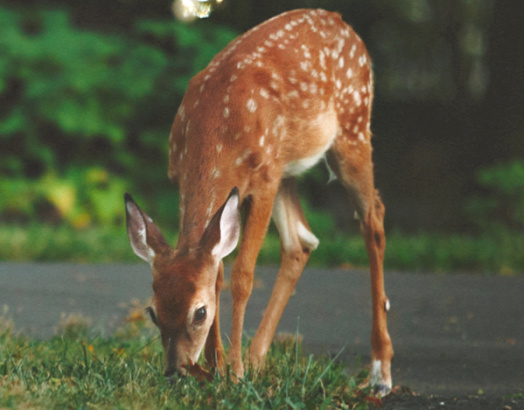
Deer, Deer, Deer When the first settlers came to America they rhapsodized about its abundant herds of deer. Now deer are the scourge of the suburbs, lured by our tasty shrubs, our hostas, our tender veggies. No tactic is infallible, but I’ve found that a 6 foot fence will often deter them (If deer pressure is extreme, a taller fence, or 2 lower fences spaced 4 feet apart may be necessary.) Where looks are important, a latticework fence is an attractive solution. I favor one with openings about 1 foot square, that does double duty as a support for edible vines like beans or ornamental ones like morning glories. For unenclosed areas my favorite temporary repellent is dried blood~great for tulips, which deer adore. I sprinkle it on by hand or use a pump-action hand duster. Since blood is a good nitrogen source for plants, it provides extra fertility as well.
Drying the Harvest Quicker than canning, more space-efficient than freezing,
vegetable drying has become the method of choice for many
home gardeners. It’s a time-honored technique~think of
southwestern ristras (dried peppers hung on strings),
sun-dried tomatoes in Italy or the “leather britches” that
our Colonial forbears created by hanging string beans above
their wood stoves. For the typical gardener, who may have
neither a wood stove nor a climate with strong sun, there
are driers you can buy that are perfect for home cooks.
The easiest edibles to dry are herbs~which can just be
suspended upside down in bundles, out of the sunlight, or on
well-ventilated screens~or peppers, which can often be
dehydrated just by slicing them and setting them on screens
above a stove or heat register. Even the warm air near the
ceiling, atop a kitchen counter, might do the trick as long
as a spell of damp weather doesn’t set in. Sliced apples are
also quick and easy, requiring only a short time in the
drier. The same goes for blueberries, sliced eggplants,
onions, celery and corn kernels.
You can dry the thicker, fleshier fruits too, such as
peaches, apricots and tomatoes. They just take longer. I’ve
found it’s better to keep the heat setting low~about 115
degrees~to avoid scorching them, as anything with sugar in
it seems to burn easily. They’re done when you can still
bend them easily but they’re no longer sticky.
Stored in a dark cupboard, in jars or plastic bags, dried
foods bring a welcome burst of concentrated flavor to winter
cuisine.
Feed Your Soil With Air
The type of particles that make up your garden soil is important, but so is a vital factor that sits between those particles: air. A loose, well-aerated soil not only allows plant roots to move freely, it also contains oxygen that nourishes the bacteria and other soil organisms that give your soil its life. In a fertile plot, earthworms will loosen up the soil for you, but here's a trick that will help if you need to let some air in immediately. Take a sturdy, 4-tined garden fork, press it in firmly and pull back on the handle to loosen the earth. Then reset your fork about 6" back and work this way on down the planting row. Fencemanship A fence’s usefulness in the garden is obvious. If well-made,
with a finer mesh at the bottom, it will keep out many types
of critters, from hungry rabbits to curious dogs. Built high
enough it will usually exclude deer. Electrified it’ll even
foil the coons. It can be an attractive way to define the
garden space and give it a pleasant sense of enclosure. It
can also double the size of your garden by adding vertical
support for plants.
My present vegetable garden is surrounded by a 6’ tall
wooden lattice fence, one wall of which forms the backdrop
of my perennial border. Along this wall the two gardens
share the space in a cooperative arrangement. At intervals
on the “flower” side, roses, clematis and morning glories
provide beauty. On the veggie side, bean vines provide
food~and often beauty as well. Varieties like the new Purple
Podded Pole Bean, with its mauve flowers and deep purple
pods, complement the plants on the decorative side with
which they often entwine.
On another wall I train vining squash and cucumbers. On
another, a few cherry tomatoes with an especially rambling
nature, such as Super Sweet 100. Often I’ll use the fence
for my early peas, followed by a few more blue morning
glories. You can never have too many of those. Surrounded by
walls of greenery, it’s a place that beckons even when
there’s lots of weeding to be done.
Foolproof
It is rare in life to find a simple, low cost solution to a host of problems, but gardeners have one - compost. It's easy to make: just let organic matter rot down into black gold. It's inexpensive: everything you need to make it (kitchen scraps, lawn clippings, pulled weeds or straw) is either cheap or free. And it works. It will lighten a heavy, clay soil and beef up a thin, sandy one. Best of all, it is a magic package already put together by Nature according to her own age-old, secret formula. If you feed your soil with compost, your plants will absorb its complete nutritional package. If you then eat those plants, you'll be receiving the benefits of that complete package yourself: the minerals, trace elements and whatever mystery elements Nature has seen fit to put in there. For Better Compost, Tote That Bale
I’ve tried many styles of compost bins, but my favorite is one
made of straw bales. You take 16 bales and stack them to make a
square box, two bales to a side and two bales high. I always feel
like a kid making a fort when I do this. Lay the bales the way
you would bricks--the spot where two bottom bales meet is covered
by the center of the bale above. I then fill the pile with
compost materials as they accumulate--green, moist ingredients
such as grass clippings and vegetable scraps alternating with dry
brown materials such as dead plant stems or loose straw. The
straw bale sides keep the compost moist and cooking all the way
out to the edge. In about two years, when its “done”, I toss the
straw sides into next year’s
heap. Gardening without a Garden
Not everybody has a yard, or the time, strength and
inclination to plant it up in vegetables. But everyone who
has a bit of sunny terrace, or even a broad, well-lit
windowsill, can grow them.
Pots and tubs are not just for geraniums and ferns. They
can grow herbs year-round. Or salad greens grown as
cut-and-come-again crops for a longer harvest. Small, quick
crops such as scallions and radishes are perfect. Baby root
crops such as golf-ball-size turnips, beets and carrots are
natural choices. Even vining crops such as tomatoes and
cukes will work if you provide a stake or a simple trellis.
And how about beautiful Rosa Bianca Eggplant, surrounded by
curly Petra Parsley? A Tuscan Lacinato Kale plant edged with
cascading Peach Melba Nasturtiums?
I like to fill veggie pots with a mixture of half peat
moss and a quarter each of soil and compost. Grouping them
together helps to conserve moisture, either in clusters on
the ground, or in tiers on benches. You can also stand a pot
atop an inverted one for height.
Even if you have a regular garden, you might keep a
mini-garden like this one near the kitchen door, handy
enough to be a busy cook’s best friend.
Getting the Best of Voles
Voles, often called meadow mice, are plump and cute, a bit bigger than a house mouse, and a favorite food of owls, hawks, foxes, snakes, possums and other creatures. All these are welcome to the voles in my garden, who love to nibble on my beets, turnips and lettuce, especially in the cold seasons. Voles feast on Siberian iris in winter too. Mowing grass and weeds closely around the perimeter of the garden exposes these tasty little fur balls to their prey. (The garden looks tidier this way too). I also space plant rows far enough apart so that there are few hiding places. When that doesn’t do the trick I trap them. Good old mousetraps work pretty well, but especially when placed inside a homemade wooden box with two vole-sized holes cut into opposite sides. Voles run in seeking cover and encounter the trap. No bait, with its giveaway scent, is necessary.
Gone to Seed There's supposed to be something very embarrassing about a garden where plants have gone to seed, where the lettuce has bolted into tall green towers, the chicories have formed bright blue bouquets and the broccoli row is a billowing mass of tiny yellow blossoms. People view it as they would an unmade bed, or the dustballs under it. It's a project you didn't keep up with, that is now running away from you like a wild thing. But look again. Notice how many butterflies and bees are hovering over the broccoli and how pretty the flowers are. Hundreds of creatures are thanking you for providing them with an abundant nectar source. Sure, you'll get around to ripping out those spent crops; but meanwhile just sit back, smell the flowers and enjoy the show! Herbs for Ornament Even if you never snip a single leaf, an herb garden earns its keep with its beauty alone. Few plant groups can compete with herbs in the foliage department and they all look so great together! Picture a healthy stand of Purple Sweet Basil next to a mound of silvery-gray sage, especially when the sage has just erupted into bloom with spikes of pink-purple flowers. Borage is worth growing just for the brilliance of its furry blossoms: an intense blue that is quite rare in the plant world. The flat yellow umbels of dill add lightness to flower arrangements. A chive plant in bloom is a bouquet unto itself. Anise hyssop, with its tall blue-purple spikes, rates a place of honor in the perennial border. So does bronze fennel, with its dark feathery leaves, or lavender, the traditional companion to roses. And when you take in the pageant of bees, butterflies and hummingbirds hovering around these useful plants, you might actually forget that the original subject was food.
Hummingbird Flower Garden Planting Instructions
When to Plant In climates with a freezing winter, our Hummingbird Flower Garden mixture can be planted in the spring after the danger of frost has passed. The latest spring planting date would be approximately mid to late June, depending on the date of first frost. Or you may also plant in the fall, as long as soil temperatures are cool enough to prevent early germination. Generally this would be mid-October.
Site Selection Select one with full sunlight for the best success. Choose a relatively weed-free site (including lawn with sod removed). Areas that contain strong weed populations and/or have soil erosion problems can be used but more extensive site preparation will be necessary.
Site Preparation Prepare the soil well because seed-to-soil contact is vital for seed germination and for the healthy rooting of seedlings. Proper preparation also prevents dormant weed seeds (present in topsoil) from becoming a further problem. LIGHTLY scratch (scarify) or roughen the soil surface. Unless the site is heavily compacted, do NOT till the soil deeply, because: 1) deep tilling promotes the germination of weed seeds already present deeper down and 2) in arid climates, deep tilling disturbs the upward movement of moisture through the soil, thereby lowering the moisture-holding capacity of the soil. To prepare small areas, remove existing weeds with a sharp hoe or mower, then follow with very shallow roto-tilling or simply hand raking. Water the area 2 or 3 times each day over a two- to three-week period to encourage dormant weed seed germination. After 2-3 weeks, when this second crop of weeds is up, mow or scrape the new weeds off at ground level. Again: do not roto-till or roughen the soil at this point. Our Hummingbird Garden will do best in soils of low to medium fertility. Go easy on fertilizing -- high nitrogen soils only encourage the growth of weeds and lush vegetative plant growth at the expense of flowers. However, if your site consists of subsoil which has shown poor results in past attempts with flowers, consider a soil test to determine exactly what nutrients might be needed and how much.
Planting Methods Because our Hummingbird Flower Garden contain seeds of vastly different sizes and are often difficult to broadcast, blend an inert carrier such as fine dry sand with the seed to insure even distribution. Use a ratio of 10:1 (sand to seed). Increase the seeding rate 50-100% for "difficult" sites such as those without supplemental water, strong weed populations, or sites with erosion problems. For small areas, hand broadcasting the seed along with the inert carrier like sand works quite well. Also helpful in distributing the seed uniformly, especially over areas greater than 20 square feet, is to draw lines on the ground to divide the area into equal, manageable portions. Then divide the seed/sand mix into the same number of portions. Another trick to divide the amount of seed\sand mix in half and try to spread evenly over the whole area, then do the same with the next half. Once the seed mix has been sown, it should be covered to a maximum depth of no more than 1/8 to 1/4 of an inch. Lightly rake the seed in with a hand rake for small areas. Care must be taken not to cover the seeds too deeply as this is one of the primary causes for failure. Where possible, roll the area with a sod roller to guarantee seeds make firm contact with soil.
After Care Keep the planting moist for 4-6 weeks, using supplemental irrigation if necessary in order to ensure germination of as many species as possible. In hot, dry weather, you may have to water 2-4 times per day with light sprinklings. As the planting becomes established, gradually reduce the frequency of supplemental watering. You should begin to see seedlings within 2 weeks and the first flowers in 6-8 weeks. As the season progresses, several waves of color will be seen according to the blooming times of the species contained in the mix. In dry climates or in drought conditions, 1/2 inch of supplemental irrigation per week will lengthen the blooming period of the flower display.
Fall Care You may want to mow the area in the fall (summer in the deep South and West) to a height of 4-6 inches, after most of the flowers have finished blooming and set seed. Mowing will help to scatter the ripe seeds for next year's showing. The following spring (or fall), also consider supplementing the site with some new seed in order to more firmly establish the permanence of the planting and to suppress weed growth. Make the Most of a Shady Garden A shady yard may be a delight in the midst of summer’s heat,
but not to a gardener searching for the perfect spot to grow
vegetables. All is not lost, however, if you are determined
to grow delicious food.
First look for the sunniest places, although this may mean
spreading your crops around in several locations. Even your
front stoop might host a tidy collection of tomatoes,
eggplants and peppers grown in attractive pots. It is these
fruiting crops that need sun the most.
Don’t discount areas with filtered light. Sunshine dancing
through moving foliage can actually be kinder to leaf crops
that wilt or bolt during hot weather, especially at midday
and during the early afternoon. Spinach and lettuce will do
fine with partial shade, as will the softer-leafed herbs
such as chervil, cilantro, tarragon and mint. (The more
rough-leafed Mediterranean ones such as sage, thyme and
rosemary, are sun-lovers.)
Root crops such as carrots and stem crops such as celery
fall somewhere in between fruit crops and leaf crops in
their need for sunshine. Even if they only get sun for a few
hours a day they’re at least worth a try.
The one thing to avoid is planting near shallow-rooted
trees such as maple, beech and apple. Lovely as these are,
they compete too ferociously with your kitchen garden for
water, nutrients and air. If they dominate your yard, find a
community garden plot to tend, or a neighbor who’d be
delighted to host your efforts in exchange for half the
bounty. Our Seed Packets
Each seed packet contains planting and horticultural information including: planting depth, row spacing, seed spacing, days to germination, ideal germination temperatures and estimated days to maturity. Horticultural care and use tips are provided as well. Average seed life ranges from one to three years and is specified by variety on each seed packet.
Prior to use, seed packets should be stored in a dry spot, away from direct sunlight and in a temperature range of 65°F to 75°F.
Root Storage for All
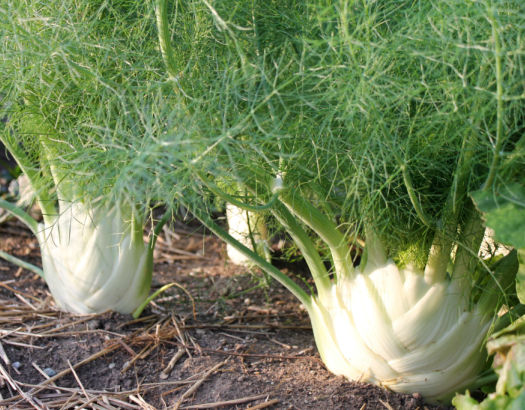
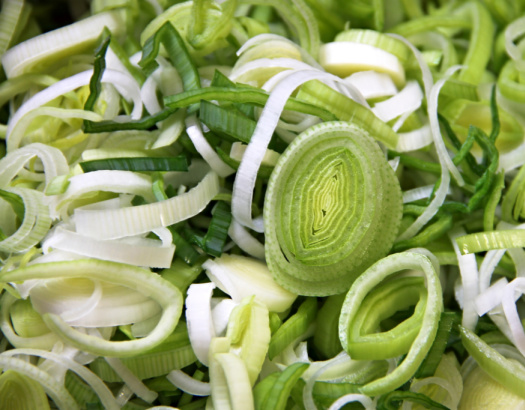
Back when everyone had a root cellar it was so simple. Vegetables like leeks, cabbages and fennel could be kept edible long after harvest, and root crops like potatoes, beets, turnips and carrots could sustain a household all winter long. A root cellar is still a great idea for a gardening family, even if it’s just a corner of the house cellar with an insulated wall to keep it cooler, and a basement window you can crack open as needed to let in cold air. A large extra refrigerator will also keep a limited amount of winter produce.
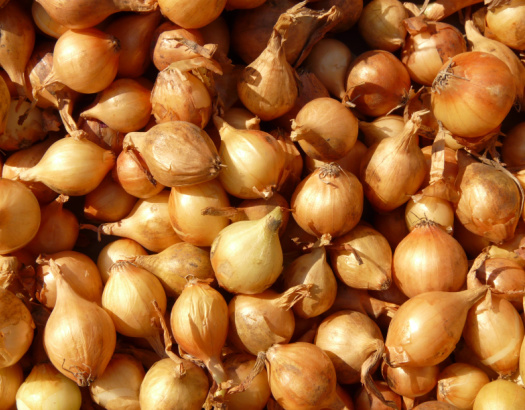
But there are other tricks you can use too. In a place with temperate winters an unheated shed or garage might fill the bill, even though it won’t have the 95% humidity that most root crops favor. A cool attic or an unused room is also better than nothing. Such cache spots are ideal for vegetables like winter squash and onions that prefer it dry, and needn’t be kept quite as cool.
Better yet, build a mini-root-cellar right in the garden by burying a metal garbage can right in the ground~or several, each filled with a different root crop. Set it just below the frost line, with insulation on top of the lid. Building an insulated box is even better, though it’s helpful to protect it from rodents by stapling hardware cloth to the outside. Where winters are cold, bury the box inside a cold frame or home greenhouse for more frost protection.
A few hardy crops like parsnips and carrots can be left right in the ground where they grew, mulched with straw or evergreen boughs if needed. They’ll be a sweet treat come spring!
Saving Seed from F1 Hybrids and Open-Pollinated Varieties Most plant varieties have been bred by crossing one variety
with another. Hybrids are created by taking the pollen from
the male parts of one plant (of a pure, inbred strain) and
transferring it to the female parts of another, different
inbred strain. The goal is to produce seeds, called “F1”
hybrids, that will grow into plants that are superior to
either parent. They might be larger and more high-yielding,
more vigorous, more uniform, more resistant to disease.
However, these offspring will not, in turn, “breed true”. In
other words, if you save seeds from an F1 hybrid and sow
them, they will not grow into plants that resemble their
parent. You have to start again each year with new F1 seeds.
On the other hand, there are many plant crosses that produce
offspring that resemble the parent, that breed true. These
are called “open-pollinated” or “OP” varieties. If you are a
gardener and you want to save seed from a plant you
especially like, you must make sure it is an OP variety.
Why do we need F1 hybrids, when the OP ones can be saved and
replanted each year? Certain kinds of vegetables, in
particular, are often made more garden-worthy by F1
hybridization: tomatoes, peppers, cucumbers, sweet corn and
summer squash come to mind. Yes, there are many great OP’s,
but with the benefits F1’s offer, there is a place for both
in the marketplace, and, in your garden.
Ten Ways to Stretch the Gardening Season
1. Plant your garden on a slope. A south-facing hillside warms up earlier than any other type of terrain. Terracing it makes for easier cultivation, but a garden bed that’s actually tilted toward the sun will give you even earlier crops. If your garden is flat you can make a bed tilt by raising the back edge with a log, a board or a row of stones, and filling in the soil at a slant.
2. Use a cold frame. This is just a bottomless box, set on top of the soil, with a framed glass lid. The box can be simple boards or concrete blocks, the lid might be made of storm windows. It will allow you to grow cool-weather crops like salad greens earlier in spring or later in fall~and sometimes all winter long. Be sure to vent the frame on sunny days, so your plants don’t get cooked.
3. To make your cold frame produce spring crops even earlier, turn it into a hot bed by burying a foot-deep layer of fresh manure under 8” of soil. This can be done by digging a pit for the manure, or else by piling it on level ground, adding soil and enclosing it with a box made of straw bales. Place your glass lid on top and the heat generated by the decomposing manure will heat up both the soil and the air inside.
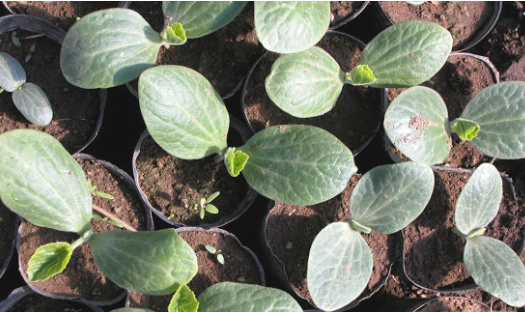
4. Start crops ahead indoors. Cold-climate gardeners do this routinely, but even those in milder regions can get a big jump on crops like tomatoes by growing them under florescent lights until the danger of frost has passed.
5. Use floating row covers. These lengths of white, spun-bonded polyester fabric give a bit of frost protection when stretched over a bed. They also keep out early pests such as root maggots and flea beetles.
6. Start sowing your hardy fall crops in mid to late summer. Most greens are at their best in crisp fall weather, as are brassicas like kale and Brussels sprouts. Some fall crops like leeks and parsnips need all summer to mature, but quicker ones like baby beets, carrots, turnips and scallions are perfect replacements for spent spring crops like lettuce and peas.
7. Many crops will last all winter in the ground. Parsnips will overwinter anywhere, and even Northern gardeners can protect a crop of carrots, leeks or spinach by mulching with straw or hay. In more temperate zones even potatoes can be mulched for winter harvesting.
8. Dig a root cellar, or create one by enclosing a corner of your house cellar with insulated walls. A basement window that you can open and close will help you regulate the temperature. Root crops stored there in winter give you a whole extra underground garden.
9. Set up a simple greenhouse and grow winter crops right in the ground. Models suitable for home gardeners are available in many shapes and sizes. You can also improvise one yourself by stretching sheets of plastic greenhouse film over a wooden frame. If your area doesn’t get heavy snow you can even make a hoophouse frame out of bent lengths of rebar stuck in the ground.
10. Prepare beds in fall for spring planting. Neither rain nor snow nor soggy soil will hold up an early planting schedule if you’ve amended your soil with compost and smoothed over the beds so that they’re ready and waiting. You might even make your furrows ahead. All you’ll need to do in spring is drop in the seeds of extra-early crops like peas, spinach and Tuscan kale.
The Do’s and Don’ts of Seed Starting The best way to grow a green thumb is just to plant a garden
each year and learn from your mistakes. But an old
gardener’s tips can sometimes steer you away from failure.
Here are the ones I go by:
1. Read the seed packet and obey its directions. If it says
to start a vegetable ahead indoors 6 to 8 weeks before the
last likely frost, do that. Note specific directions such as
covering the seeds lightly, or not at all. Other seeds will
be sown directly in the garden at the seed packet’s
recommended time.
2. Use a good-quality, fine-textured, sterile soil-less mix
for germinating indoor seeds, to avoid damping off.
3. Large seeds can go directly into cells or pots, a few in
each, then thinned. But most seeds are tiny and are sown in
small trays or flats to start. Then as soon as they
germinate, lift them carefully and plant them individually
in cell packs or pots. The younger they are when you do
this, the better they will grow.
4. Good light is the most important, and often the most
difficult thing to provide. Windowsills never seem to be
sunny enough, and dimly-lit plants become tall and spindly.
A set of broad-spectrum florescent lights suspended right
above the seedlings gives great illumination~plus some heat.
The lights under your kitchen counter might work if you
install full-spectrum bulbs. Raise your flats closer to them
(4” to 5”) with some bricks~or fat cookbooks.
5. Harden off your transplants progressively by putting them
outside for increasing periods of time on nice days, but
don’t rush them into the ground. Especially if they’re
warm-weather crops like tomatoes. Plants set out later will
quickly catch up to early-planted, shivering ones.
6. If you use peat pots for your transplants, tear off the
rims and slash the sides. Handy as these are, they are
actually quite hard for roots to penetrate.
7. Keep your leftover seeds in a cool, dry place. With many
you can sow several times throughout the season for a steady
supply of a favorite crop.
The Rotation Game It’s not hard to keep vegetables healthy. Giving them compost-rich soil and ample sun and water will usually do the trick. But for extra insurance it’s also worth rotating your crops. The object of the game is simple: to avoid pests and diseases that are specific to certain plants. The basic rule: never plant anything in the same spot where it grew during the last three or four years. The reason: insects and pathogens often over-winter in the soil, hoping for a second helping. Rotation has other benefits too. Crops affect the soil in different ways. Corn feeds hungrily, but brings up minerals from below. Legumes make nitrogen more available to crops that follow. “Smothery” crops like squash clean a bed of weeds, but sparse ones like carrots may leave a weedy legacy. Brassicas do well following onions, and potatoes do well following corn.
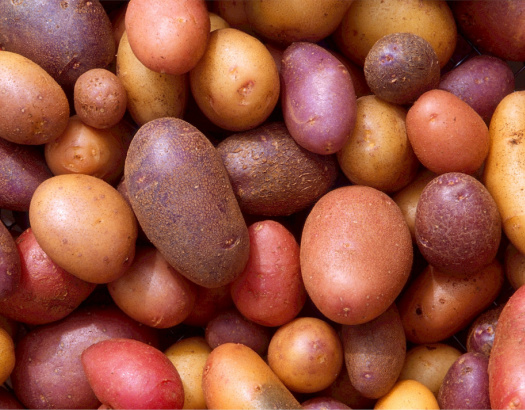
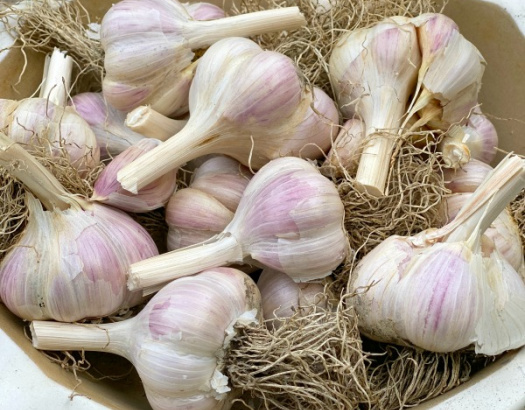
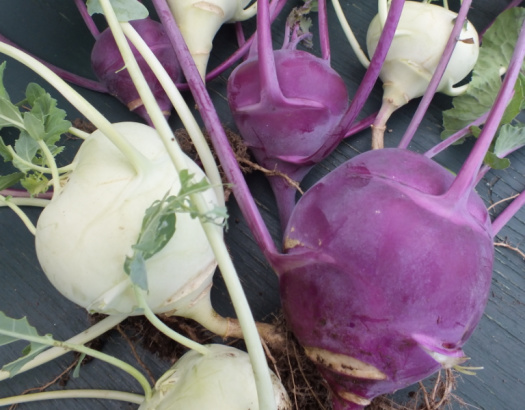
If you grow lots of different vegetables, a rotation scheme can get pretty complicated. If you delight in games of infinite possibility, like chess, you’ll enjoy calculating where you can relocate the pole beans without shading the peppers, or how to follow early spinach with late kale and keep your scheme intact. If your patience level makes you better suited to “Go Fish” you can still manage a basic rotation. The rule to remember is “families stick together”. Plant the solanaceae (potatoes, tomatoes, peppers, eggplant) all in one section of the garden. Grow the brassicas (cabbage, broccoli, arugula, kale, mustard, Brussels sprouts) in another. Cucurbits such as squash, melons and cucumbers go together, as do the legumes (peas, beans), the beet-spinach-chard group and the onion-leek-garlic tribe. Tuck in the lettuce where you can, and sprinkle the garden with umbelliferous herbs like dill and cilantro, to lure pollinators. Rotate everybody clockwise each year, as in a square dance, or in a line, as in a Virginia reel. It’s fun! And any number can play.
TLC for Spring Soil
Once spring comes we’re all itching to get out in the garden and dig. But digging is usually the last thing our spring soil needs. It’s still too wet, and digging it or roto-tilling it will just make it clump up and stay wetter. When it finally dries it will dry in hard clods~especially if the soil is a clay one. The best approach is to prepare beds the fall before, adding plenty of organic matter in the form of compost or well-rotted manure. These make the soil sponge-like, enabling it to hold water in times of drought, and to drain well when soggy. For now, be patient and let the earthworms do your digging for you.
Volunteer Army
Everyone needs a little help from their friends, and my herb
garden helpers are self-sowing herbs. It is great to know that if
I never get around to starting new coriander, dill or chamomile
plants I will still have them in my garden. In fact the self-sown
ones are often healthier than those I plant myself. Remember that
any appearing in the “wrong” place can always be transplanted. What Does F1 and OP Mean?
At the end of vegetable descriptions, each variety is
labeled “F1” or “OP”. This is important only if you plan to
save seeds from the plants that you grow to replant in the
future.
F1 hybrids are created by deliberately taking the pollen
from the male parts of one pure, inbred plant and
transferring it to the female parts of a different pure,
inbred plant. The goal is to produce a new variety that is
superior to either parent: larger, higher-yielding, more
disease-resistant, more delicious or more vigorous, among
other criteria. The new variety or offspring is called an F1
hybrid. Seed from F1 hybrid plants will not likely breed
true for future crops. You should start each growing season
with F1 seed from a reliable supplier like us. (Our
vegetable seeds have a shelf life of two to five years,
noted on the back of each seed packet.)
On the other hand, varieties labeled “OP” (short for
open-pollinated) will grow true to variety name from seeds
produced by the plants that you grow yourself. These seeds
may be saved and will produce the same plant in future
sowings as long as proper seed-saving procedures are
followed. Please refer to www.seedsave.org for detailed
seed-saving instructions.
Winter Sports Gardeners tend to be a peaceful lot, happier deadheading a daisy than engaging in a blood sport. But if you've found your lawn or cold frames riddled with small tunnels and strewn with the nibbled remains of your winter greens, you'll probably sound the hunting horn and go after the culprits.
These are voles. Not mice, not moles, but small furry creatures a bit like both but more chubby. They are fruit eaters, but are eclectic in their appetites - something you probably already know. A conscientious cat (and upon occasion, a dog) may solve your problem for you, but failing that, the best remedy is a collection of ordinary mousetraps. Bait them with fruit-flavored gum or peanut butter and set them along the inside edge of your cold frame or greenhouse (or, for an outdoor problem, along the wall of the house). They tend to skitter along the edge of structures and are likely to bump into your trap. Snap! | |